
Here’s a selection of climate and environmental projects that I’ve had the pleasure of working on:
2019 – 2021 | MBA Candidate at Yale School of Management
With support from the Switzer Foundation as a 2020 Switzer Environmental Fellow, I developed skills to elevate environmental sustainability as a business bottom line through the levers of corporate strategy, innovation, and impact investing.

Global Social Entrepreneurship
I was selected to enroll in Yale’s Global Social Entrepreneurship course, a practicum for Yale graduate students to address management challenges faced by real-world social enterprises. My team and I delivered a financial model and path-to-profitability recommendations to Acacia Innovations, a Nairobi-based manufacturer and distributor of clean-burning briquettes and cookstoves.
MBA Impact Investing Network & Training (MIINT)
I was selected to join Yale’s chapter of MIINT, an experiential lab designed to give business and graduate students a hands-on education in impact investing. Through MIINT, my team and I sourced and conducted diligence on early-stage impact investments in cleantech. We ultimately pitched Raise Green, a crowdfunding platform for community-driven climate project finance, to Yale’s judging committee for potential MIINT investment.
Tsai Center for Innovative Thinking at Yale (CITY) Financing Innovation Intensive
I was selected to join Tsai CITY’s Financing Innovation Intensive, a cohort-based experiential learning opportunity focused on raising and directing capital towards innovation. My team and I assessed the financial model and environmental impact potential of Cambium Carbon, an early social impact venture looking to restore tree cover across the United States.

2019 Deloitte-Yale Net Impact Case Competition
The 2019 competition challenged participating teams to design an innovative business model for an international conservation non-profit. My team placed 2nd of 18 teams by recommending the development of a revenue-generating eco-tourism certification program to fund the non-profit’s core products and services.
2020 | Sustainability Initiatives at Lyft
As a 2020 Environmental Defense Fund Climate Corps Fellow, I advanced a portfolio of environmental initiatives with Lyft’s Sustainability Team over a summer graduate internship.

I delivered Lyft’s independently verified 2019 greenhouse gas footprint, which identified for Lyft its most impactful emissions reduction opportunities and allowed Lyft to credibly claim carbon neutrality for 2019. I also led cross-functionally to develop Lyft’s first-ever full disclosures to CDP Climate and RE100, and contributed to the continued development of Lyft’s Environmental, Social, and Governance (ESG) reporting efforts.
2018 – 19 | Corporate Supply Chain Sustainability at Ceres
Ceres is an advocacy non-profit for business leadership on sustainability. While at Ceres, I developed customized business intelligence to help Fortune 500 consumer brands manage their exposure to social and environmental risks in their global supply chains, and contributed to the following reports:

Tools to Manage Greenhouse Gas Emissions in Agricultural Supply Chains:
An analysis of available resources (i.e. standards, methodologies, tools, and calculators) for assessing emissions from agricultural production and agriculture-driven land-use change.

Scope 3 Emissions Management in Food and Beverage Companies:
An analysis of the extent to which 50 top food and beverage companies disclose on Scope 3 emissions in their supply chains.
2018 | Organic Farming in the U.S. Southwest
To try and deepen my perspectives on sustainable agriculture, I spent two months on a road trip around the U.S. Southwest volunteering with World Wide Opportunities on Organic Farms (WWOOF). I split my time between two small-scale animal farms and gained an understanding of how certain communities build resilient local food systems and make a living directly from land.
2015 – 18 | Climate Philanthropy at Stanford and The Packard Foundation
I held a research fellowship with the Stanford Woods Institute for the Environment focused on advancing The David and Lucile Packard Foundation’s US$50M annual climate change mitigation grantmaking strategies, and worked primarily with The Packard Foundation’s Climate Innovations and Land Use teams. A few of the projects I worked on at The Packard Foundation included:
Advancing Socially and Environmentally Sustainable Palm Oil
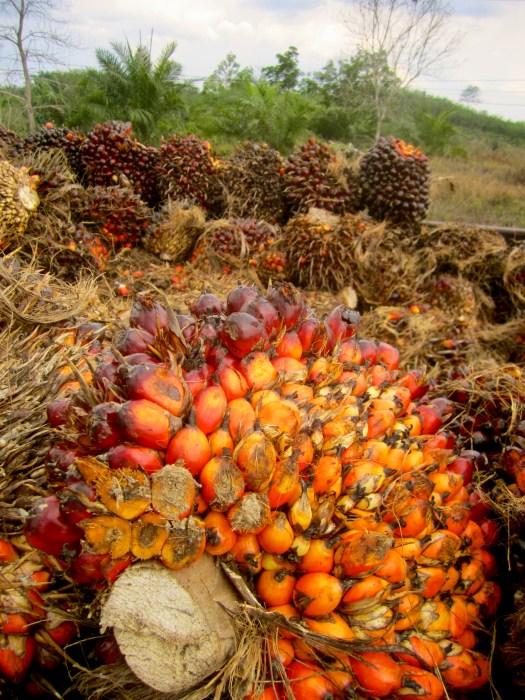
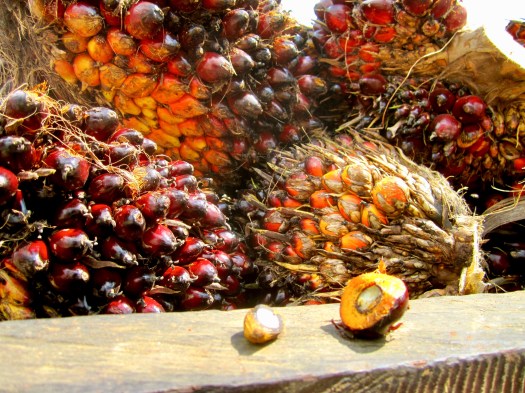
The Packard Foundation’s Palm Oil Strategy focuses on advancing market-based solutions to reduce the greenhouse gas emissions trajectory of oil palm cultivation in Indonesia. I co-authored The Packard Foundation’s Palm Oil Strategy Review, a critical assessment of progress made and lessons learned under The Packard Foundation’s Palm Oil Strategy since 2014, and Palm Oil Strategy Refresh, which takes lessons learned to guide The Packard Foundation’s palm oil grantmaking through 2021.

Scaling Climate Moonshots
I was part of the original team to design and implement Climate Breakthrough Project, a new philanthropic effort that supports extraordinary strategists to create and implement the boldest climate change mitigation strategies they can conceive.
Understanding Global Beef Industry Impacts
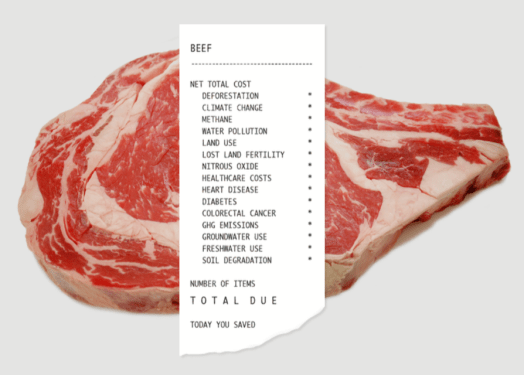
I advised on a white paper produced by Climate Focus on the impacts of the global beef industry on climate, human health, and tropical forests.
Supporting Agriculture, Livelihoods, and Conservation
I advised on the development of an emerging grantmaking strategy at The Packard Foundation on Agriculture, Livelihoods, and Conservation.

Growing the Pipeline of Environmental Leaders in Indonesia
I consulted on a project led by Kopernik to design a new leadership program to support emerging environmental leaders in Indonesia.
Developing Industry Standards for Responsible Palm Oil
I consulted on the production of the Reporting Guidance on Responsible Palm, a set of shared expectations for corporate reporting on company commitments towards responsible palm oil sourcing and production.
2013 – 14 | Remote Sensing and Forest Conservation at the University of Cambridge
With support from the Keasbey Memorial Foundation as their 2013-14 Fellow, I pursued an M.Phil degree in Forest Ecology and Conservation at the University of Cambridge. Under the guidance of Dr. David Coomes and his Remote Sensing for Forest Conservation group, I conducted research that aimed to clarify the relationship between deforestation and ecosystem health in tropical forest reserves through the use of emerging remote sensing technologies. I published the following peer-reviewed papers from my Master’s research:


Comparing New Remote Sensing Technologies to Assess Forest-Cover Change:
An analytical comparison of traditional and emerging remote sensing technologies for forest cover and forest change monitoring. I explain my research in more detail here, and you can find my published manuscript in Remote Sensing here.
Beyond my Master’s research, I was also committed to advancing sustainability performance at Cambridge.

Sustainability Initiatives at King’s College, Cambridge
I was elected by my peers as Environmental Officer on the King’s College Graduate Society Executive Committee, and worked on a number of environmental projects to attain for King’s its first-ever Green Impact accreditation status. Green Impact is a United Nations award-winning program that recognizes environmentally and socially sustainable performance, and the achievement was recognized in the King’s College 2014 Annual Report.
2009 – 13 | Interdisciplinary Environmental Research at Middlebury College and Beyond
As an undergraduate at Middlebury College, I complemented my liberal arts education with various independent research projects that broadened my perspectives on the types of interdisciplinary environmental work that I could pursue post-college.

Understanding Carbon Storage in a Bioenergy Plantation
My senior honors thesis research analyzed the carbon storage profile of a local willow plantation to inform Middlebury’s carbon neutrality goals. I explain my research in more detail here.
Assessing Environmental Values Among Chinese Youth
I received a Sustainable Study Abroad Grant from Middlebury College to conduct a comparative study while studying abroad in Beijing and Kunming, China on how Chinese youth perceive and value the environment. I explain my research in more detail here.

Bioengineering Carbon Sequestration Solutions
I was selected to take part in the U.S. Department of Energy’s (DOE) Science Undergraduate Laboratory Internship (SULI) program. I spent my summer research internship engineering microbial surfaces for improved geologic carbon sequestration at the Lawrence Berkeley National Lab’s Molecular Foundry. I explain my research in more detail here.
Optimizing High-Performance Microelectronics
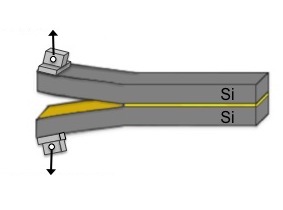
I was selected to take part in the National Science Foundation’s National Nanotechnology Infrastructure Network’s Research Experience for Undergraduates (NNIN REU) program. I spent my summer research internship working on an Intel-funded project to improve adhesion in flip chip devices with Stanford’s Department of Materials Science and Engineering. I explain my research in more detail here.
2008 | Climate Impacts with Stanford Earth Sciences

I conducted field research at the intersection of ants, butterflies, and climate change at the Jasper Ridge Biological Preserve in Portola Valley, CA. I explain my research in more detail here.
 GILLIAN LUI